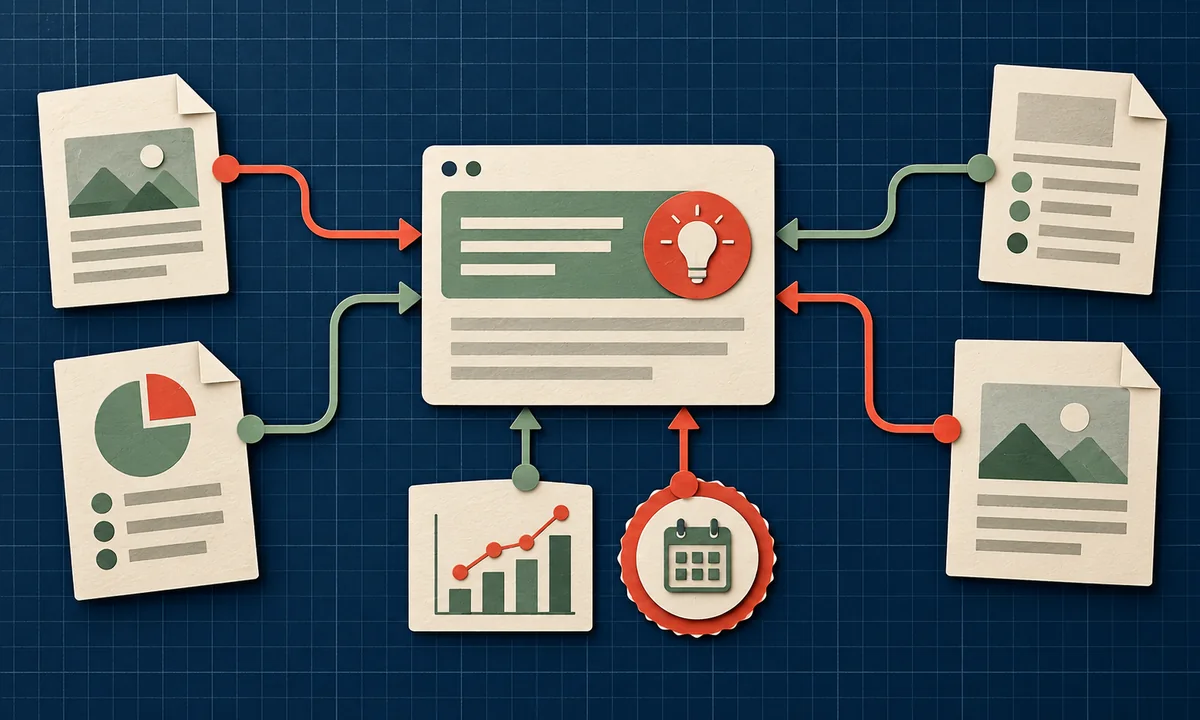
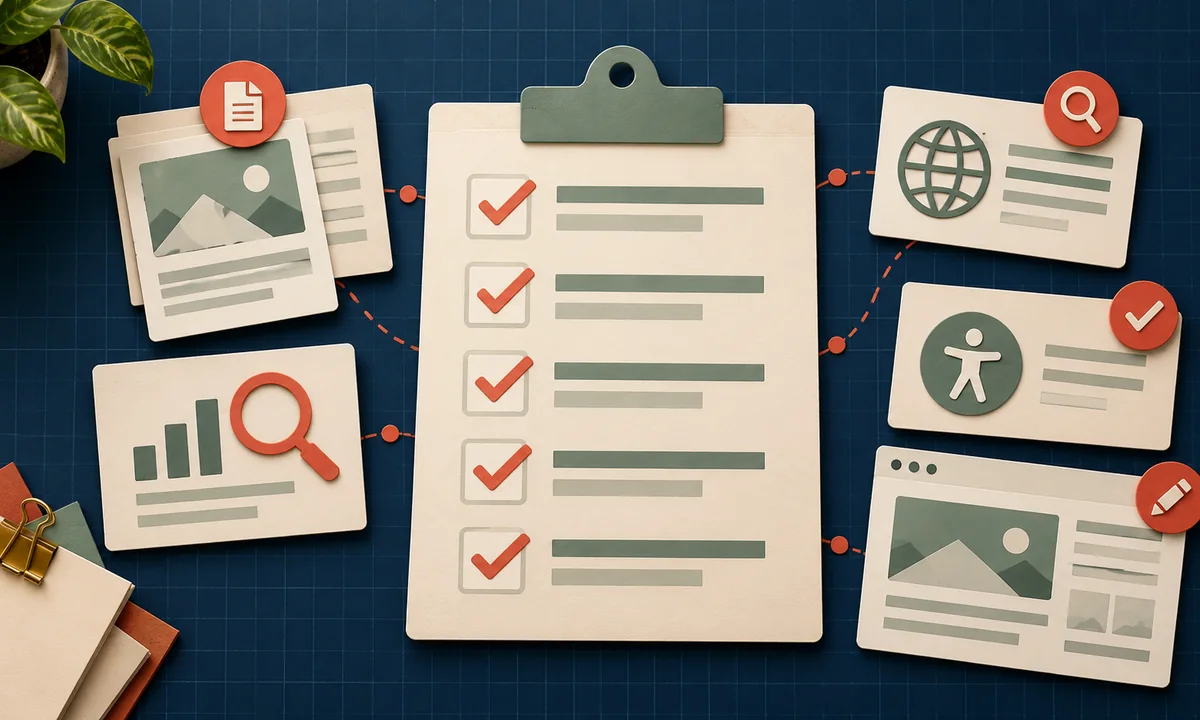
Publishing an article for AI search is easy. Publishing one that survives a careful fact-check is harder. A good GEO review asks whether the page is useful to a person, faithful to its sources, technically reachable, and worth revisiting after an answer engine has summarized it.
Use this checklist before publication and again when the article is refreshed.
Check the answer
Read the title and opening paragraph without the rest of the page. Can you identify one primary question and a direct answer? Does the answer include the condition that changes it? “Use structured data” is incomplete; “add structured data that matches visible content when an eligible feature exists” is a decision someone can act on.
Then read the full article. It should add a method, example, comparison, or original observation—not just repeat the opening in longer form. Our clear-answer guide shows how to turn a broad topic into a focused page.
Pew Research Center's analysis of 68,879 searches found AI summaries on 18% of its March 2025 Google searches. Question-led searches produced summaries more often: 60% of queries beginning with question words did so. These numbers describe a particular sample and period, not a universal exposure rate. They support writing for real questions, not stuffing headings with interrogatives.
Check every number and source
For each material statistic, open the original report. Does the published sentence preserve the value, population, period, and method? Is an “up to” result still labeled “up to”? Does a correlation get described as a correlation rather than a cause? Is the source linked near the claim?
The GEO research paper reports visibility gains of up to 40% in its experimental setting. A review should reject “GEO boosts visibility by 40%” as a universal promise. Our source-trail workflow gives each important claim a record and an owner.
Prefer primary research, official documentation, and disclosed methodology. If you have original data, explain the denominator and exclusions. If a useful source is a survey, state that respondents reported the behavior. Give the reader enough detail to evaluate the claim without opening five tabs.
Check technical access and presentation
Google's guide to generative AI features says pages must meet ordinary Search technical requirements, be indexed, and be eligible for a snippet to appear in its AI features. It also says satisfying those conditions does not guarantee display. Check status codes, robots.txt, noindex, canonicals, internal links, and rendered text. Our repeatable technical SEO review turns that into a monthly routine.
Do not add markup simply because it sounds AI-friendly. Google's structured data guidance requires markup to represent visible page content and documents the supported feature types. A clean heading hierarchy and clear attribution help humans even if no special search feature appears.
Accessibility belongs in the same review. WebAIM's 2026 audit found detected WCAG failures on 95.9% of one million home pages. The study covers homepages, not GEO articles specifically, but it is a useful reminder to test keyboard navigation, contrast, descriptive links, and alternative text. A page that is hard to use is a weak destination for any traffic source.
Check the business and reader outcome
Pew found that users clicked a cited link within an AI summary on only 1% of visits with such a summary. That is a reason to measure more than citations. Track impressions and visits where available, but also watch what visitors do after arrival: read a related guide, use a tool, subscribe, enquire, or buy. A citation with no useful next step is a limited win.
Finish with a sign-off record: question answered, source reviewer, technical reviewer, accessibility check, publication date, and next review date. Have someone outside the writing team read the page and say what they learned and what remains unclear. Update the AI search foundations and related hub links when the new article fills a genuine gap.
The checklist is complete when the claims can be checked, the page can be reached, and the reader can do something useful with the answer. No ranking or citation promise is required.
Assign a review date based on volatility. A source with changing market data may need a check next month; a page explaining a stable standard can wait longer. Record the decision in the editorial brief so the next editor knows what to revisit first. That is how a good article stays trustworthy after the launch announcement fades.